
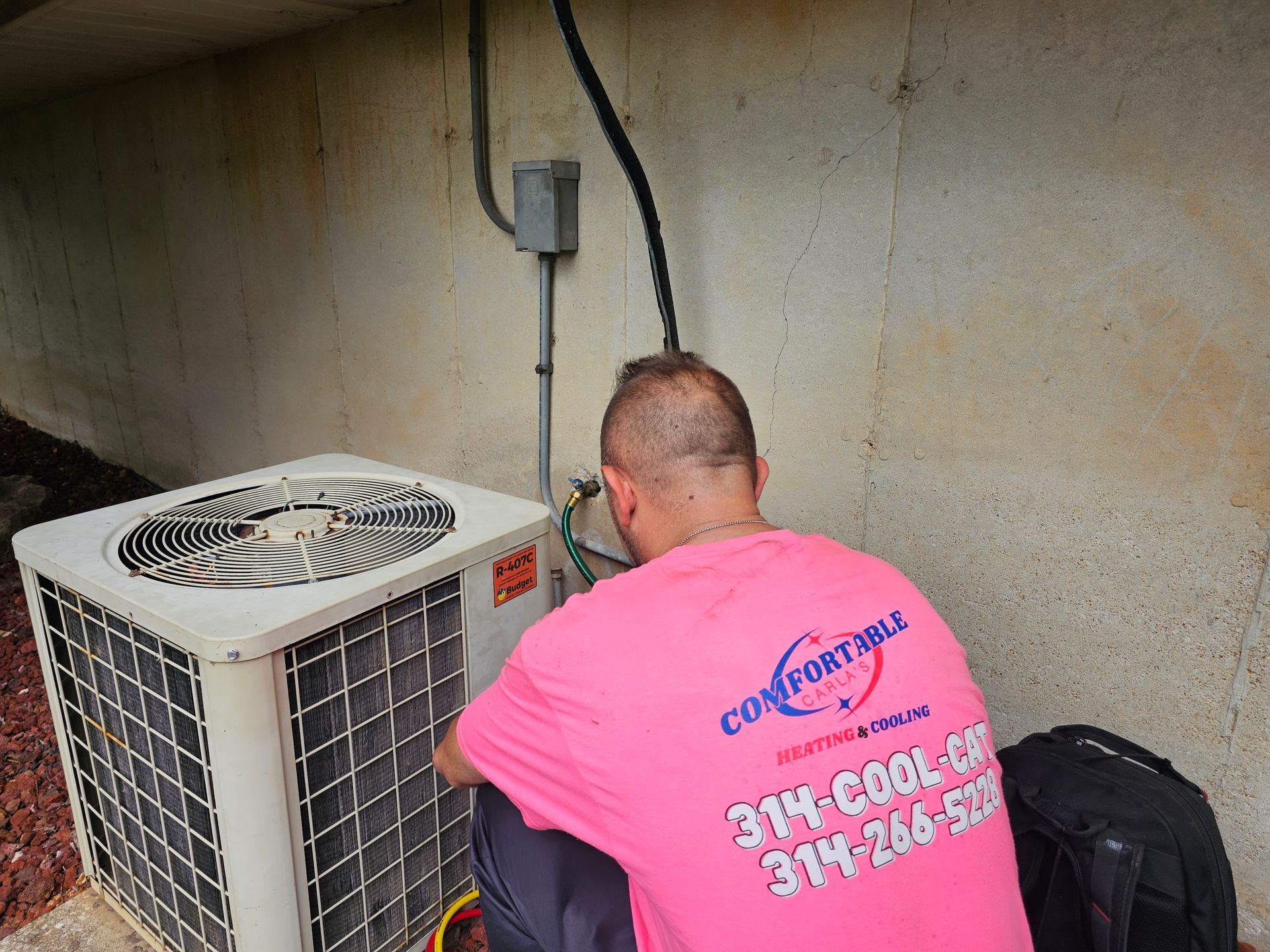
Complete Setup From Assessment to Startup
HVAC Installation in St. Louis for homes replacing aging equipment or addressing insufficient heating and cooling capacity
Installing an HVAC system requires more than connecting a new furnace and air conditioner—proper installation begins with property assessment, evaluates existing ductwork integrity, matches equipment capacity to actual heating and cooling loads, and ensures that airflow, refrigerant charge, and combustion settings meet manufacturer specifications. Homeowners typically need installation when equipment exceeds 15–20 years of age, when repairs become frequent and costly, when the system uses obsolete R-22 refrigerant, or when rooms never reach comfortable temperatures despite a functioning system. Comfortable Carla's handles HVAC installation for St. Louis area homes where summer cooling demand pushes systems to their limits and winter heating must counter subfreezing temperatures reliably.
The installation process begins with assessment of your home's square footage, insulation levels, window area, ductwork condition, existing equipment location, and specific comfort concerns. Technicians calculate heating and cooling loads to determine appropriate equipment size—oversized systems cycle too frequently and fail to control humidity, while undersized systems run continuously without reaching set temperatures. Equipment options are presented based on efficiency levels, features like variable-speed blowers or two-stage compressors, and whether your home benefits from heat pump technology or traditional split systems.
Request a free installation estimate to review equipment options matched to your home's specific requirements.
What HVAC Installation Actually Accomplishes
Installation includes removing old equipment, positioning the new furnace or air handler and outdoor condensing unit, connecting refrigerant lines with proper insulation, running condensate drains with adequate slope, wiring thermostat and control circuits, sealing all ductwork connections, charging refrigerant to manufacturer specifications, adjusting airflow to match duct capacity, testing safety controls, and verifying temperature rise across the furnace and temperature drop across the cooling coil. Each step affects whether the system operates efficiently and reliably once weather places heating or cooling demand on the equipment.
After installation is complete and the system runs through full heating and cooling cycles, your home reaches set temperatures consistently in all rooms rather than leaving some areas warmer or cooler than others. The equipment starts quietly and runs without the rattling, squealing, or odor issues that indicate airflow restrictions or loose components. Temperature swings narrow—rooms stay within one or two degrees of the thermostat setting instead of overshooting and cycling. Humidity becomes easier to control during summer because properly sized and charged cooling coils remove moisture effectively before the system satisfies the thermostat and shuts off prematurely.
Installation does not include ductwork modifications beyond sealing connections, electrical panel upgrades if your service capacity is insufficient, removal of hazardous materials like asbestos pipe wrap around old ductwork, or structural changes to accommodate different equipment dimensions. These items are identified during assessment and quoted separately so installation pricing remains clear and complete without unexpected additions.
Common Questions About This Service
Homeowners planning HVAC installation to replace aging or inadequate equipment typically ask these questions during the estimate process.
How is the correct equipment size determined for a St. Louis home?
Load calculation uses Manual J methodology, accounting for square footage, insulation R-values, window area and orientation, ceiling height, air infiltration rates, occupancy, and local design temperatures—approximately 95°F for summer cooling and 5°F for winter heating in the St. Louis area. The calculation produces heating and cooling loads in BTUs, which determine appropriate equipment capacity and prevent oversizing that causes short cycling and humidity control problems.
What happens if existing ductwork is undersized for new equipment?
Undersized ducts restrict airflow, causing the system to operate inefficiently, produce uneven temperatures, and potentially overheat or freeze components due to inadequate air movement across heat exchangers and cooling coils. Technicians measure duct dimensions and compare them to required airflow for the new equipment—modifications may include adding return air pathways, increasing trunk line size, or installing additional supply runs to rooms that currently receive insufficient airflow.
Why does refrigerant charge matter during installation?
Refrigerant must match the system's design charge precisely—typically specified in ounces, not pounds—to achieve rated efficiency and capacity. Undercharged systems struggle to cool during hot weather and may freeze the evaporator coil; overcharged systems stress the compressor, reduce efficiency, and cause high head pressures that shorten equipment life. Technicians charge by weight and verify with pressure and temperature measurements at both the indoor and outdoor units.
How long does a complete HVAC installation typically take?
Most residential installations are completed in one full day for straightforward replacements where ductwork, electrical service, and equipment locations remain unchanged. Installations requiring duct modifications, electrical panel upgrades, equipment relocation, or multi-zone system setup may extend to two days depending on the scope of work and whether inspections are required.
What should I expect during the first few days after installation?
New systems may produce slight odors during initial operation as manufacturing oils burn off and dust accumulated during installation clears from ductwork. Thermostats may need minor adjustments as you determine preferred temperature settings. Any unusual noises, failure to reach set temperatures within 30 minutes, or visible refrigerant leaks require immediate follow-up to address installation issues before they cause component damage.
Comfortable Carla's installs heating and cooling systems sized and configured for dependable year-round comfort in St. Louis area homes. Call (314) 266-5228 to request a detailed installation estimate based on your property's specific heating and cooling demands.