
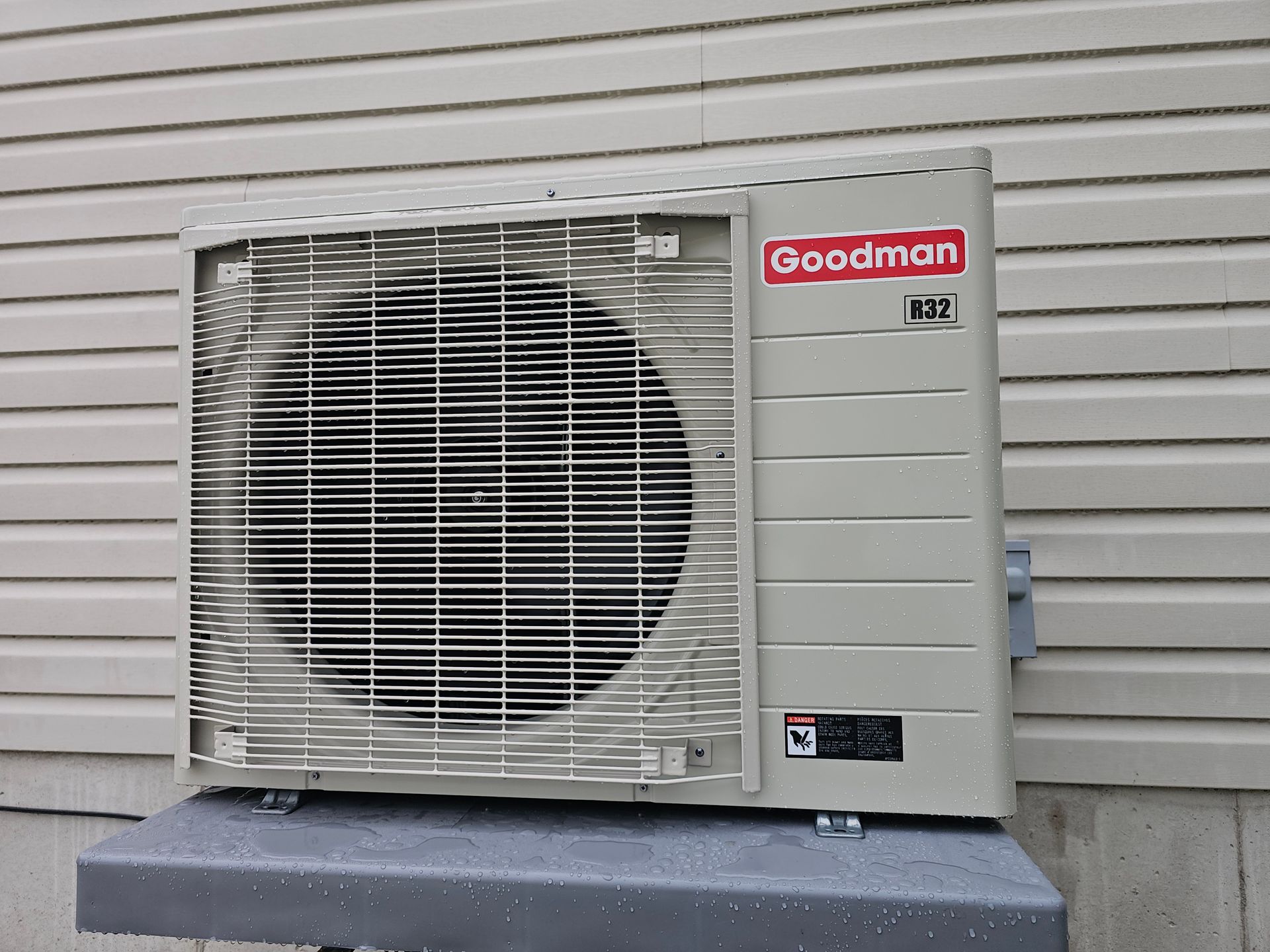
Systems Built to Handle All Four Seasons
Residential HVAC Services in St. Louis for homes facing humidity, summer heat, and freezing winter demands
St. Louis weather creates two distinct mechanical demands on home HVAC equipment: cooling systems work against 80–90°F temperatures combined with 70–80 percent humidity from May through September, while heating systems counter subfreezing nights and sustained cold from December into March. Comfortable Carla's provides residential HVAC services that address both heating and cooling performance, airflow distribution, system efficiency, and indoor air quality across these seasonal extremes. Homeowners dealing with uneven temperatures, weak airflow, frequent cycling, or rising utility costs typically need assessment of system capacity, duct integrity, refrigerant charge, or component wear.
Residential HVAC service begins with system assessment—inspecting the furnace or heat pump, air handler, condensing unit, ductwork, thermostat operation, and airflow patterns throughout the home. Technicians measure temperature differentials, check refrigerant levels, test electrical connections, examine heat exchangers for cracks, and evaluate filter condition and duct sealing. This process identifies whether problems stem from refrigerant loss, blower motor issues, duct leaks, thermostat calibration, or equipment that no longer matches the home's heating and cooling load.
Schedule a system assessment to identify specific performance concerns and necessary repairs.
What Proper Residential HVAC Service Requires
Complete residential service addresses every component that affects comfort—not just the outdoor condensing unit or indoor furnace. Ductwork must be sealed and insulated to prevent conditioned air from escaping into attics or crawlspaces, particularly in homes where ducts run through unconditioned spaces. Airflow adjustments ensure that rooms farthest from the air handler receive adequate heating and cooling, which matters in two-story homes or additions built after the original system was installed. Refrigerant charge must match manufacturer specifications; undercharged systems struggle in summer heat, while overcharged systems reduce efficiency and strain compressors.
After service is completed, your home reaches set temperatures faster and maintains them consistently across all rooms. Systems cycle less frequently because the equipment no longer works against airflow restrictions, refrigerant imbalances, or dirty components. Humidity levels stabilize indoors during summer months when cooling coils operate at correct capacity. Furnaces deliver steady heat output without the short cycling that occurs when burners or blowers are restricted by dirt buildup or failing components.
Residential HVAC service also includes indoor air quality evaluation—identifying whether additional filtration, humidity control, or ventilation improvements will address dust accumulation, persistent odors, or moisture problems. These considerations vary by home construction, occupancy patterns, and whether the property includes a basement prone to dampness or an attic that radiates heat into living spaces during summer.
What Property Owners Usually Ask
Homeowners preparing for seasonal temperature changes and managing ongoing comfort concerns typically ask these questions before scheduling residential HVAC service.
What causes some rooms to stay warmer or cooler than others?
Airflow imbalances usually result from undersized ductwork to specific rooms, closed or blocked supply vents, duct leaks in unconditioned spaces, or return air pathways that pull air unevenly from different areas of the home. Technicians measure airflow at each register and trace duct runs to locate restrictions or leaks that prevent proper distribution.
How does St. Louis humidity affect cooling performance?
High outdoor humidity raises the latent cooling load—your air conditioner must remove moisture as well as lower temperature. Systems that are oversized for the space or have airflow problems may cool the air quickly but shut off before removing enough moisture, leaving the home feeling clammy even at the set temperature. Proper refrigerant charge and correct blower speed settings allow the evaporator coil to condense moisture effectively.
When should I consider replacing rather than repairing my system?
Replacement becomes the more practical option when repair costs approach 50 percent of new equipment value, when the system uses R-22 refrigerant that is no longer produced, when the heat exchanger has developed cracks that allow combustion gases to mix with household air, or when the equipment consistently fails to maintain comfort despite repeated repairs.
What does a complete system assessment include?
Assessment involves measuring supply and return airflow, testing refrigerant pressures and temperatures, inspecting electrical connections and capacitors, checking thermostat calibration, examining ductwork for leaks or damage, evaluating filter condition and fit, and testing safety controls on furnaces including flame sensors and limit switches.
How often should residential HVAC systems be serviced?
Most systems benefit from inspection twice per year—once before cooling season to prepare the air conditioner and once before heating season to prepare the furnace. Homes with pets, occupants who have allergies, or systems that run frequently due to poor insulation may need filter changes and additional attention between seasonal service appointments.
Comfortable Carla's evaluates heating and cooling performance, ductwork condition, and indoor air quality for St. Louis area homes facing seasonal temperature extremes. Arrange an in-home assessment to review your system's current condition and address specific comfort concerns.