Preparing Equipment for Seasonal Demand
HVAC Maintenance in St. Louis for systems facing humid summers and subfreezing winters
Routine HVAC maintenance identifies problems while they are still developing—refrigerant levels dropping due to slow leaks, electrical connections loosening from thermal cycling, condensate drains partially clogged but not yet overflowing, or blower motors drawing higher amperage as bearings wear. Comfortable Carla's provides maintenance service for St. Louis area homes where air conditioners must handle 90°F days with 70 percent humidity from June through August and furnaces run continuously when January nights drop below 10°F. Scheduled service prepares equipment for these seasonal extremes before peak weather exposes weaknesses that cause mid-season failures.
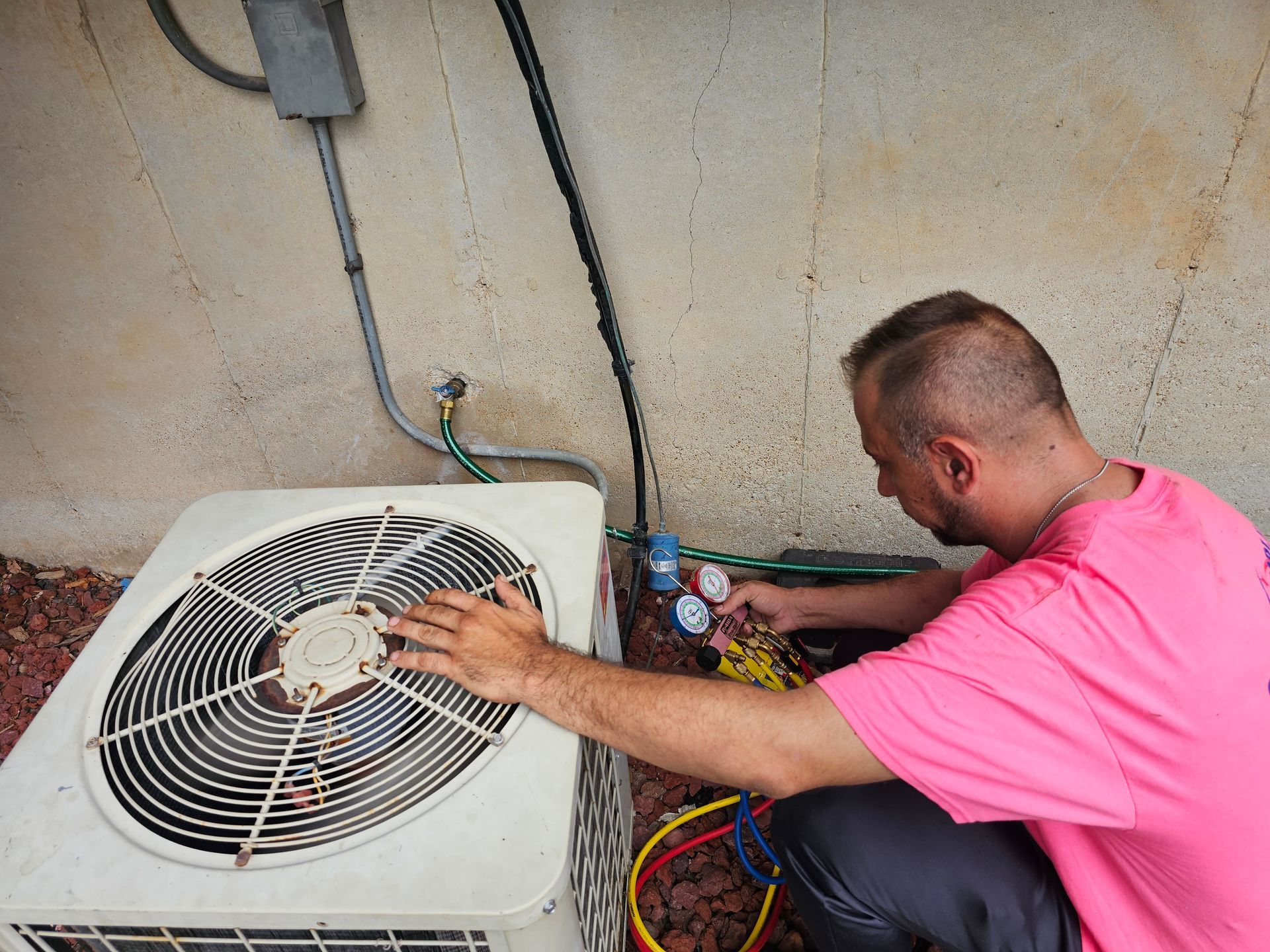
Maintenance visits include inspection of all system components, cleaning of coils and blowers, filter replacement, condensate drain clearing, refrigerant pressure measurement, electrical connection tightening, thermostat calibration, and performance testing under actual operating conditions. Technicians document system condition and identify components showing wear or degradation that may require attention before the next service interval.
Schedule maintenance before cooling season begins in April or before heating season begins in October.
The Difference Between Maintenance and Reactive Repairs
Maintenance addresses system condition before failures occur, while repairs respond to equipment that has already stopped working or lost significant capacity. Spring maintenance inspects cooling components—cleaning outdoor coil fins that restrict airflow when packed with cottonwood seeds and pollen common in St. Louis, checking refrigerant charge and searching for leaks, testing capacitors that weaken from heat exposure, and clearing condensate drains that clog with biological growth in humid climates. Fall maintenance focuses on heating components—inspecting heat exchangers for cracks, testing ignition systems, checking gas pressure and burner flame patterns, and verifying that safety controls shut down the furnace if dangerous conditions develop.
After seasonal maintenance is completed, your system operates as designed—furnaces ignite reliably on cold mornings, air conditioners start smoothly when afternoon temperatures climb, airflow remains consistent without the gradual weakening that occurs as filters load with dust, and equipment runs quietly because moving parts are lubricated and components are secured. You avoid mid-season failures during extreme weather when service demand is highest and repair response times stretch longer.
Maintenance does not prevent all failures—components can fail suddenly despite regular service—but it reduces the frequency of unexpected breakdowns and extends functional system life by preventing minor issues from causing secondary damage. A small refrigerant leak detected during maintenance costs far less to repair than the compressor failure that results when low refrigerant causes the unit to overheat during sustained operation on a 95°F afternoon.
What Homeowners Usually Ask
Property owners managing year-round HVAC performance in St. Louis area climate conditions typically ask these questions about maintenance scheduling and service.
How often should HVAC maintenance be performed?
Most systems benefit from service twice per year—once in spring before cooling season places heavy demand on the air conditioner, and once in fall before heating season requires reliable furnace operation. Homes with pets that shed heavily, properties in areas with high pollen or dust, or systems that run frequently due to poor insulation may need filter changes between scheduled maintenance visits.
What specific tasks are included in HVAC maintenance?
Cooling maintenance includes outdoor coil cleaning, indoor coil inspection, refrigerant pressure and temperature measurement, condensate drain clearing, electrical connection inspection and tightening, capacitor testing, contactor examination, blower cleaning, filter replacement, and thermostat calibration. Heating maintenance adds heat exchanger inspection, burner cleaning and adjustment, flame sensor cleaning, ignition system testing, gas pressure verification, flue draft measurement, and safety control testing.
Why does St. Louis climate make seasonal maintenance particularly important?
High summer humidity promotes biological growth in condensate drains and on cooling coils, causing clogs and airflow restrictions. Temperature swings from subfreezing winters to 90°F summers create thermal expansion and contraction that loosens electrical connections over time. Cottonwood seeds and seasonal pollen pack outdoor coil fins during spring, restricting airflow just as cooling demand increases. These local conditions accelerate the wear patterns that maintenance is designed to identify and address.
Can maintenance prevent all mid-season breakdowns?
Maintenance reduces failure frequency but cannot eliminate all unexpected problems—components occasionally fail suddenly without warning signs, refrigerant leaks can develop between service visits, and electrical storms can damage control boards or compressors. However, systems receiving regular maintenance experience fewer emergency failures and tend to provide advance warning through declining performance rather than abrupt shutdown.
What happens if maintenance is skipped for several years?
Neglected systems accumulate dirt on coils and blowers that restricts airflow, develop refrigerant leaks that reduce capacity, experience electrical connection corrosion that causes intermittent operation, and run with clogged filters that force components to work harder and wear faster. When service is eventually performed, technicians typically find multiple problems requiring repair rather than the minor adjustments needed during routine maintenance, and overall system life is shortened due to cumulative wear.
Comfortable Carla's performs seasonal HVAC maintenance for St. Louis area homes, identifying developing problems before peak cooling or heating demand exposes equipment weaknesses. Call (314) 266-5228 to schedule spring or fall maintenance and prepare your system for the coming season.