
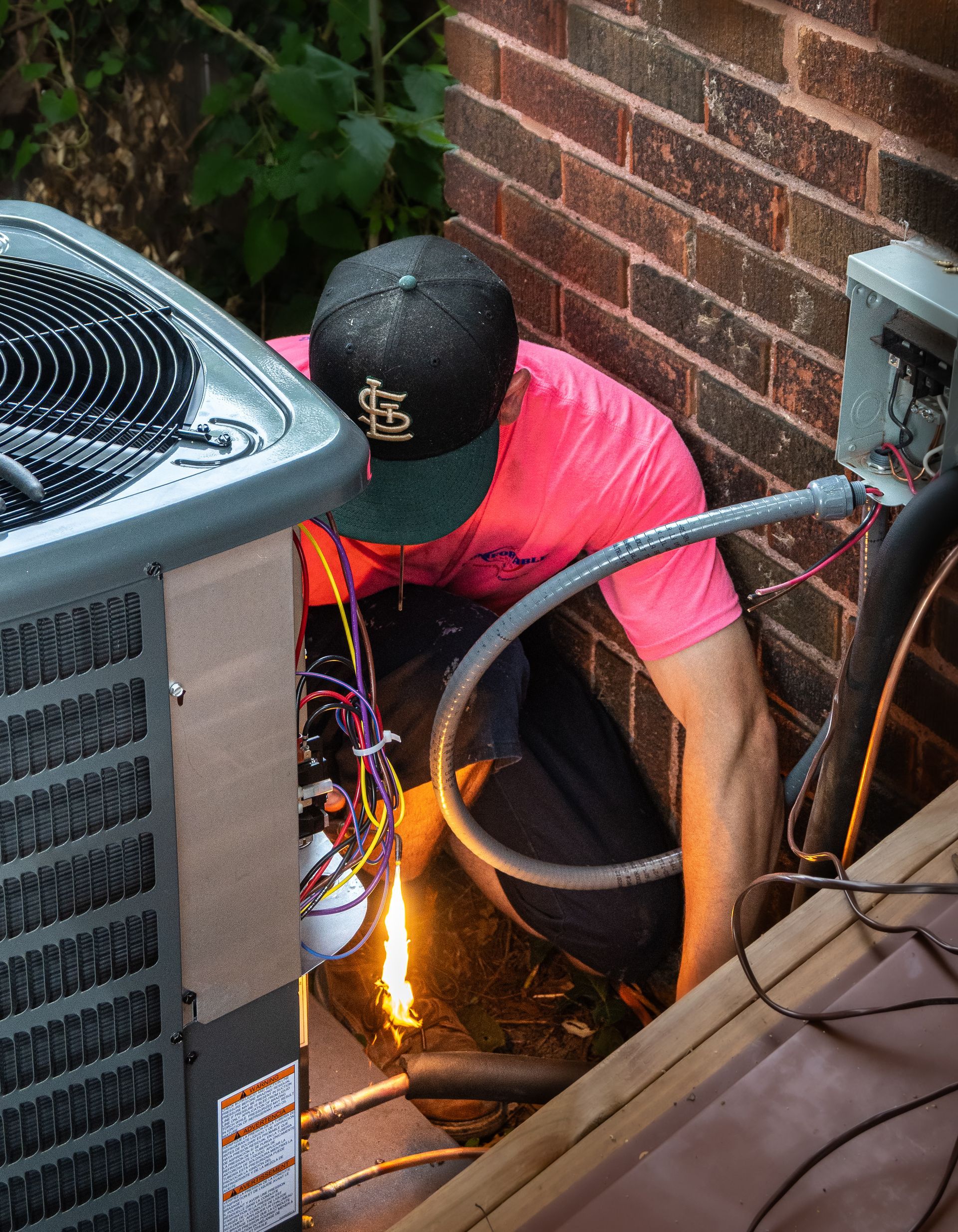
Diagnosing Problems Before Presenting Solutions
HVAC Repairs in St. Louis for systems delivering inadequate heating, weak cooling, or inconsistent temperatures
Your furnace cycles on but rooms stay cold, or the air conditioner runs constantly without lowering the temperature below 80°F during an afternoon when outdoor humidity sits at 75 percent. HVAC failures show up as complete shutdowns, inadequate heating or cooling output, weak airflow from supply vents, unusual sounds during operation, or systems that start and stop every few minutes without completing a full cycle. Comfortable Carla's provides HVAC repair service in St. Louis, Imperial, Fenton, and surrounding areas, where cooling system failures during July and August create immediate discomfort and heating failures in January can freeze pipes if indoor temperatures drop too far.
Repair service begins with diagnostic evaluation—technicians test thermostat operation, measure voltage at components, check refrigerant pressures and temperatures, inspect blower motor function, examine heat exchangers for cracks, test capacitors and contactors, and evaluate airflow at supply and return vents. This process identifies whether the problem originates with electrical components, refrigerant loss, mechanical failures, airflow restrictions, or control system issues before repair options are discussed.
Schedule repair service to diagnose the source of inadequate heating or cooling performance.
What Proper HVAC Repairs Require
Effective repairs address the underlying cause rather than replacing parts based on assumptions. A system that won't start may have a failed capacitor, tripped safety control, loose wire connection, or defective thermostat—accurate diagnosis prevents unnecessary part replacement and repeat service calls. Refrigerant loss requires locating and sealing the leak before recharging; simply adding refrigerant without repair results in repeated capacity loss and compressor damage. Airflow problems may stem from dirty coils, failed blower motors, collapsed ductwork, or incorrect blower speed settings that require different solutions.
When repairs are completed correctly, your system returns to normal operation—furnaces deliver consistent heat output across all cycles, air conditioners lower indoor temperature to the thermostat setting and maintain it without excessive runtime, airflow from supply vents feels strong and steady, and equipment operates quietly without rattling or squealing that indicates loose or failing components. Temperature complaints from specific rooms stop because repaired systems distribute conditioned air evenly through properly functioning ductwork and blowers.
Some repairs restore immediate function but indicate that broader system problems will require attention soon—patching a refrigerant leak on a 15-year-old coil provides temporary cooling but doesn't address the corrosion causing pinhole leaks throughout the coil. Technicians identify these situations during diagnosis and explain whether repair extends functional life meaningfully or simply delays replacement that will become necessary within the next year or two.
Questions Before Starting Your Project
Homeowners facing heating or cooling failures during extreme St. Louis weather typically ask these questions when arranging repair service.
What causes an air conditioner to freeze up during operation?
Evaporator coil icing usually results from restricted airflow due to dirty filters or blocked return vents, low refrigerant charge that drops coil temperature below freezing, or failed blower motors that reduce air movement across the coil. Ice buildup blocks remaining airflow and forces the system to shut down until the coil thaws completely, which can take several hours even after airflow or refrigerant issues are corrected.
Why does a furnace start but shut off after a few seconds?
Short cycling on startup typically indicates a failed flame sensor that cannot confirm ignition, a cracked heat exchanger triggering safety lockout, a malfunctioning limit switch, or incorrect gas pressure preventing stable burner operation. Technicians test each safety control and measure flame characteristics to determine whether the issue requires component replacement or gas supply adjustment.
How does St. Louis humidity affect cooling repairs?
High outdoor humidity increases the moisture load on cooling coils, making existing problems worse. Systems with marginal refrigerant charge or airflow restrictions that might cool adequately in dry climates struggle when they must condense large amounts of water vapor from incoming air. Repairs must restore full capacity and airflow to handle both temperature reduction and dehumidification during humid summer conditions common in this area.
When should I repair versus replace an aging HVAC system?
Repair makes sense when the system is under ten years old, when repair costs are less than one-third of replacement value, when the problem is isolated to a single component rather than indicating systemic wear, and when refrigerant type is still readily available. Systems over 15 years old with compressor or heat exchanger failures, or those using R-22 refrigerant, often reach the point where replacement is the more economical decision.
What information helps technicians diagnose problems faster?
Note when the problem started, whether it occurs during heating or cooling mode, if the outdoor unit runs when the indoor blower operates, any unusual sounds or odors, whether some rooms receive airflow while others don't, how long the system runs before shutting off, and whether circuit breakers have tripped. This information helps technicians bring appropriate tools and parts for likely failure modes, reducing diagnostic time.
Comfortable Carla's diagnoses heating and cooling failures, presents clear repair options, and restores dependable operation for St. Louis area homes. Call (314) 266-5228 to arrange same-day or next-day repair service when your system stops working or fails to maintain comfort.